
Hubei Province
Wuhan
A practical Wuhan guide for choosing a riverbank, station and season, then building days around cross-river travel.
Suggested stay: 3 days
At a glance: choose a riverbank and station
| Planning point | Practical choice |
|---|---|
| Recommended stay | Three nights gives a Hankou day, a Wuchang or East Lake day and a rail buffer. |
| Arrival geography | Match the ticket’s exact station to the hotel before committing to the first day. |
| Core transport | Group each day by riverbank and make cross-river moves deliberate. |
| Booking pressure | Yellow Crane Tower, seasonal East Lake demand and holidays need current checks. |
| Walking demand | Riversides, hills and large landscape areas can consume more time than map distances suggest. |
| Main risk | Adding several river crossings to a short itinerary. |
Wuhan is best understood as a river city with several strong centres, not as a short list of sights around one station. The Yangtze and Han rivers divide the urban geography, while rail arrivals can place visitors at very different edges of the city. A two- or three-day stay gives room to group each day by riverbank and avoid treating a bridge crossing as a five-minute map move.
Choose Hankou, Wuchang or East Lake Deliberately
Hankou is practical for a central-business and older riverfront stay; Wuchang makes more sense for Yellow Crane Tower direction and some university or heritage plans. East Lake is a separate landscape choice rather than an add-on to a packed central day. The Wuhan Government travel hub is a useful official orientation point for these major visitor areas.
Choose the base by looking at the real first and last movements of the trip. Mark your arrival station, hotel, first planned sight and departure station, then check the routes at the hours you will actually use them. A district label can conceal a long walk to a metro entrance, an inconvenient interchange or a river crossing. Save the hotel’s Chinese address and ask for the most practical drop-off point if you will arrive with luggage.
For a first evening, keep the goal small: a meal close to the hotel, a short neighbourhood walk and time to check that maps and payment methods work. This is especially useful after a train journey. It makes the following day less dependent on solving every practical problem while trying to reach a timed attraction.
Make River Crossings Part of the Plan
The river is Wuhan’s great visual asset and a real planning boundary. Choose the day’s side of the river first, then add only one cross-river movement if it genuinely improves the route. Rush hour, weather and the final walk from a metro exit can turn a simple-looking transfer into the day’s longest segment.
Think of every crossing as a small itinerary decision rather than empty space between pins. Name the reason for it: a specific sight, a dinner reservation, a hotel return, or a change of atmosphere. If there is no clear reason, stay on the same side and give that area more time. This approach works particularly well for visitors with a limited stay, because it replaces repeated navigation with a walkable cluster of streets and stops.
Before setting out, save both the outbound and return routes. Screenshot the destination name in Chinese, the closest useful exit and the hotel address. If conditions change, a simple return route is more valuable than a theoretically faster route that depends on several unfamiliar changes. At night or in heavy rain, choose comfort and clarity over squeezing in one additional viewpoint.
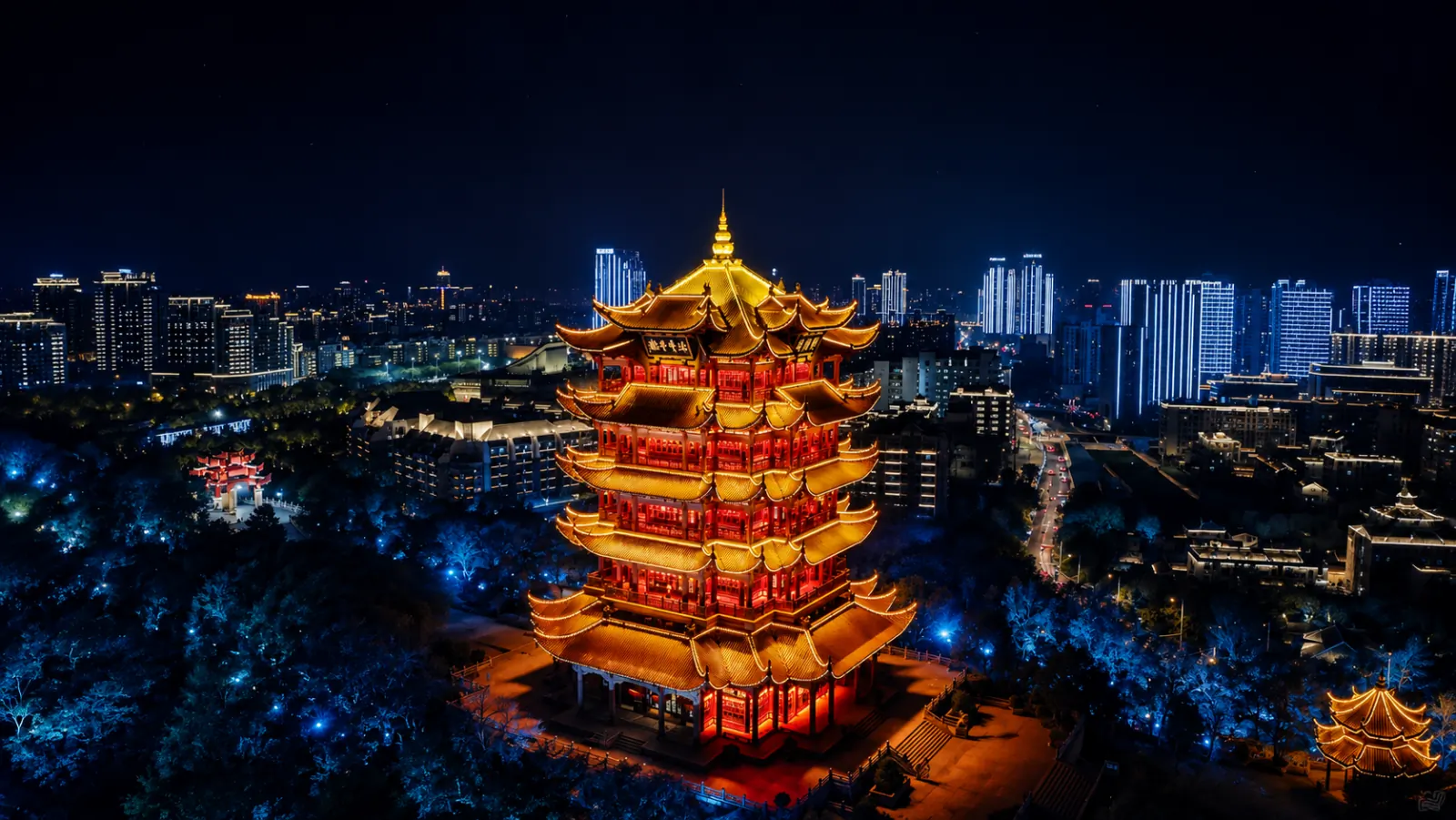
Put Yellow Crane Tower in a Wider Wuchang Day
Yellow Crane Tower belongs with a Wuchang-side route rather than a hurried detour between stations. The municipal visitor material identifies it as one of the city’s defining landmarks; use the official travel page for context, then verify current ticketing, entrances and opening arrangements with the attraction before you go.
Plan this as a destination with an approach, not only a viewpoint. Allow time to find the correct entrance, pass any current checks and orient yourself after entry. Pair it with one nearby activity or a relaxed meal rather than a long list of separate Wuchang-side stops. If you want photographs, consider the light and weather as flexible preferences, not a reason to risk a fixed train or another reservation.
The best preparation is specific: check the official notice for the current day, save the address in Chinese and read the most recent visitor rules. If official guidance requires an advance reservation, make it only through a trusted channel and retain the confirmation. If it is unclear, leave room in the route for another Wuchang-side walk or indoor alternative rather than treating entry as guaranteed.
Treat East Lake as a Landscape Day
East Lake has enough scale to justify a slower itinerary. Pick one access point, walking or cycling objective, and return plan; do not assume every scenic-area pin is near every other one. In blossom season or during public holidays, expect demand and confirm transport and access details close to travel.
Decide what a successful East Lake day means for your group. It could be an unhurried waterside walk, time in one clearly defined scenic area, or simply space outdoors between busier city days. These are different plans, so do not add a distant entrance or a fixed evening reservation until you know the walking distance and exit route. Carry water, weather protection and a charged phone, and wear shoes that remain comfortable after several hours.
Set a turnaround time before you begin. Large landscapes invite “just a little farther,” but the return journey is easier when you know where you will stop and which exit you will use. If rain, heat or crowding changes the experience, it is fine to shorten the walk and replace the rest with a meal or a nearby indoor activity. A flexible landscape day is still a complete day.
Confirm the Exact Railway Station
Hankou, Wuchang and Wuhan East are not interchangeable labels. Match the hotel, first activity and departure plan to the station printed on the ticket. A recently introduced local rail loop is described by the Wuhan Government, but services, fares and timetables are operational facts: check them again with the operator and do not build a non-refundable connection around an old announcement.
Keep the full station name, train number and departure time in an offline note. On arrival, first establish how you will get from the station to the hotel; on departure, reverse that route rather than inventing a new cross-city itinerary with bags. Stations may have more than one exit and a larger internal walk than maps suggest, so leave buffer for security, wayfinding and platform access.
When an itinerary includes two rail journeys, avoid assuming they use the same station. Check each ticket independently and treat the transfer as a separate trip. If a connection is tight, choose a shorter final activity and protect the train rather than trying to optimise every last hour. Operator information is the appropriate source for current service details; city announcements are useful background, not a substitute for a live check.
Plan Around Heat, Rain and Blossom Demand
Summer heat and rain can make riverside walks and cross-city transfers tiring; spring floral periods can make popular areas more crowded. Keep an indoor alternative and leave buffer around reservations. A weather forecast is a reason to reorder the route, not a guarantee that transport or a venue will operate normally.
Build the daily plan around one outdoor priority and one indoor fallback. A wet afternoon can be reassigned to a museum, longer meal or hotel rest, while a clearer window can be used for the riverfront or a larger park. Bring a layer for air-conditioned interiors as well as rain or sun protection appropriate to the forecast. Make food, water and rest breaks explicit rather than hoping they appear between attractions.
Seasonal popularity is a signal to verify, not an invitation to rely on last year’s pattern. Check official attraction notices near the trip, especially for reservation rules, restricted access and temporary changes. Keep a backup nearby that does not require a new timed entry. This reduces the pressure on a popular day and helps a group stay together when people have different energy levels.
Save Names, Payments and Exit Details
Keep Chinese names and addresses with each booking, together with a screenshot of the correct entrance. Yellow Crane Tower is 黄鹤楼, East Lake is 东湖, Hankou Railway Station is 汉口站 and Wuchang Railway Station is 武昌站. Our guides to payments, maps and rail cover the shared setup.
Carry the passport used for any rail or attraction booking, screenshots of confirmations and a charged power bank. A second payment option is sensible in case an app, card or connection is temporarily unavailable. Keep the essential information in a format that can be shown to a driver or hotel staff without needing to explain it verbally: destination name, address, reservation date and your next station.
Prepare the basics before a high-pressure moment. Test maps and payments on an early, low-stakes purchase, and download or cache relevant map information where your chosen service supports it. When travelling in a group, share the hotel address and the day’s meeting point with everyone. This simple redundancy is more helpful than depending on one person’s phone.
Keep Departure Day Intentionally Light
On the final day, select a breakfast, short walk or last meal near the station on the ticket. Check out with enough time to collect bags, reach the correct station and clear the entry procedures. Reconfirm the station name the evening before: a plan that is convenient for Hankou may be awkward for Wuchang or another rail stop.
Leaving time unused is not wasted in a city with wide rivers, large stations and weather-sensitive walking. If everything runs smoothly, the spare time can become a relaxed coffee or an earlier arrival at the platform. If it does not, the buffer protects the onward journey. Keep any final attraction optional unless you have independently confirmed its access and your route back.
Reservations, Chinese names and offline preparation
Put the actual gate in the phone, not just the landmark
Use the passport that matches rail or attraction bookings, and keep the confirmation, date and entry point as a screenshot. The Wuhan Government travel hub is useful orientation for major areas, while the official Yellow Crane Tower page provides city context; neither should be treated as a live ticket, hours or entrance guarantee. Confirm current arrangements with the responsible attraction before paying or building a non-refundable connection around it.
Yellow Crane Tower is 黄鹤楼, East Lake is 东湖, Hankou Railway Station is 汉口站, Wuchang Railway Station is 武昌站 and Wuhan East Railway Station is 武汉东站. Save the hotel, next station, intended entrance and return pickup in Chinese. Carry a power bank and second payment option, test maps before a timed booking and share the hotel address and a meeting point with companions. Our maintained payments, map apps and rail guide cover the shared setup.
Food, a practical three-day route and common mistakes
Use arrival day for the hotel side of the river. Make the first full day Hankou or a defined central riverfront route, with one indoor alternative. Use the next day for Wuchang and Yellow Crane Tower or a single East Lake plan—not both as a rushed cross-city circuit. Keep the third day flexible for weather, a museum, a slower meal or an onward train. The Wuhan Government rail-loop announcement is background, not a live schedule; use the operator for current service details.
Heat, rain and blossom demand can change the realistic walking load. Carry water, rain or sun protection and comfortable shoes, and set a turnaround time for East Lake. At restaurants, communicate allergies in Chinese where possible, ask about ingredients and avoid making a busy meal queue the last link before a station transfer. Do not assume a short line across the river on a map is a quick crossing, or that two tickets with “Wuhan” use the same station.
Before-you-go checklist and maintained guides
- Confirm the exact station, hotel entrance and current operator for timed attractions.
- Save Chinese screenshots for the hotel, tower or lake access point and next station.
- Carry booking identification, power, weather protection and a second payment option.
- Keep the final activity optional before a rail or airport transfer.
- Use the advisory Visa Checker and China Travel Pulse guides for broader preparation.